Where to Stay Near Moab for Arches and Canyonlands
The where-to-stay question in Moab is more interesting than it looks.
You are not just choosing between cheaper hotel, nicer hotel, and “how much do I like free breakfast?” You are choosing what kind of Moab trip you want.
You can stay in town and walk to dinner after a dusty adventure day. You can park an RV at a full-service resort with hookups. You can rent a cabin or Airstream-style glamping setup. You can camp along the Colorado River with canyon walls around you. You can boondock outside town if you are set up for it and know the current rules.
All of those are real options around Moab, and they feel genuinely different from each other. For most first-time visitors, staying in or very near Moab town is the easiest choice — close to Arches, Canyonlands, restaurants, groceries, fuel, tours, and the reset moments that matter more than people expect.
After a long desert day, not driving another 45 minutes for dinner can feel like a luxury.
Here is how to decide where to stay near Moab for Arches and Canyonlands.
Quick Answer: Where Should You Stay Near Moab?
• Best overall for first-timers: Moab town
• Best for visiting Arches: Moab or north Moab — the park entrance is just a few miles north
• Best for Canyonlands Island in the Sky: Moab or north of town toward UT-313
• Best for walkability: Downtown / Main Street area
• Best for RV travelers: Full hookup RV parks in or near town
• Best for dogs: Pet-friendly lodging or RV parks with reliable A/C or heat
• Best for scenery: Highway 128 / Colorado River corridor campgrounds
• Best for a unique stay: Glamping, cabins, or Airstream-style rentals
• Best for budget travelers: Legal dispersed camping outside restricted areas — check current rules first
• Best for longer trips: A mix of lodging styles
Moab is the best basecamp for both Arches and Canyonlands Island in the Sky. Arches is just north of town; Island in the Sky is farther out but commonly accessed from Moab via US-191 and UT-313.
Hotels and Short-Term Rentals in Town
If this is your first Moab trip and you are not in an RV, staying in or near downtown Moab is probably the right call.
Moab has hotels from budget-friendly to nicer properties with pools, and most put you within easy reach of both parks, restaurants, coffee, gear shops, and tour check-ins. Short-term rentals and Airbnbs are strong options for families, groups, or anyone who wants a kitchen and more space for a longer stay.
One of the things we love about staying near town is being able to walk to food. We have stayed near Proper Brewing from Sun Outdoors and been able to walk over after a full day of exploring.
That may not sound like a major travel strategy.
It is.
When you are tired, dusty, and already spent half the day in a vehicle, not driving again for dinner feels genuinely good.
The honest tradeoff: peak-season pricing in Moab can get steep, and the best-located options fill quickly. October and April are not secrets. Book early.
Best for: non-RV travelers, first-time visitors, couples and families who want convenience and walkability.
RV Parks and Resorts in Town
For RV travelers, a full-service park in or near town is often the most practical and comfortable base.
Hookups matter more in Moab than in most places. Summer heat can make boondocking without power difficult. Cold desert nights drain batteries faster than expected. And if you are traveling with dogs who stay back in the rig while you go into the parks or take the Jeep out, reliable climate control is not optional — it is the whole plan.
RV parks in town also serve as reset points: dump tanks, fill water, charge batteries, do laundry, shower, restock groceries. That last part is underrated after a few dusty desert days.
Best for: RV travelers, dog owners, summer and cold-season visits, and anyone doing a longer trip who needs a proper basecamp.
Glamping, Airstreams, and Cabin Stays
If you want something between a standard hotel and a campsite, Moab has genuinely good options.
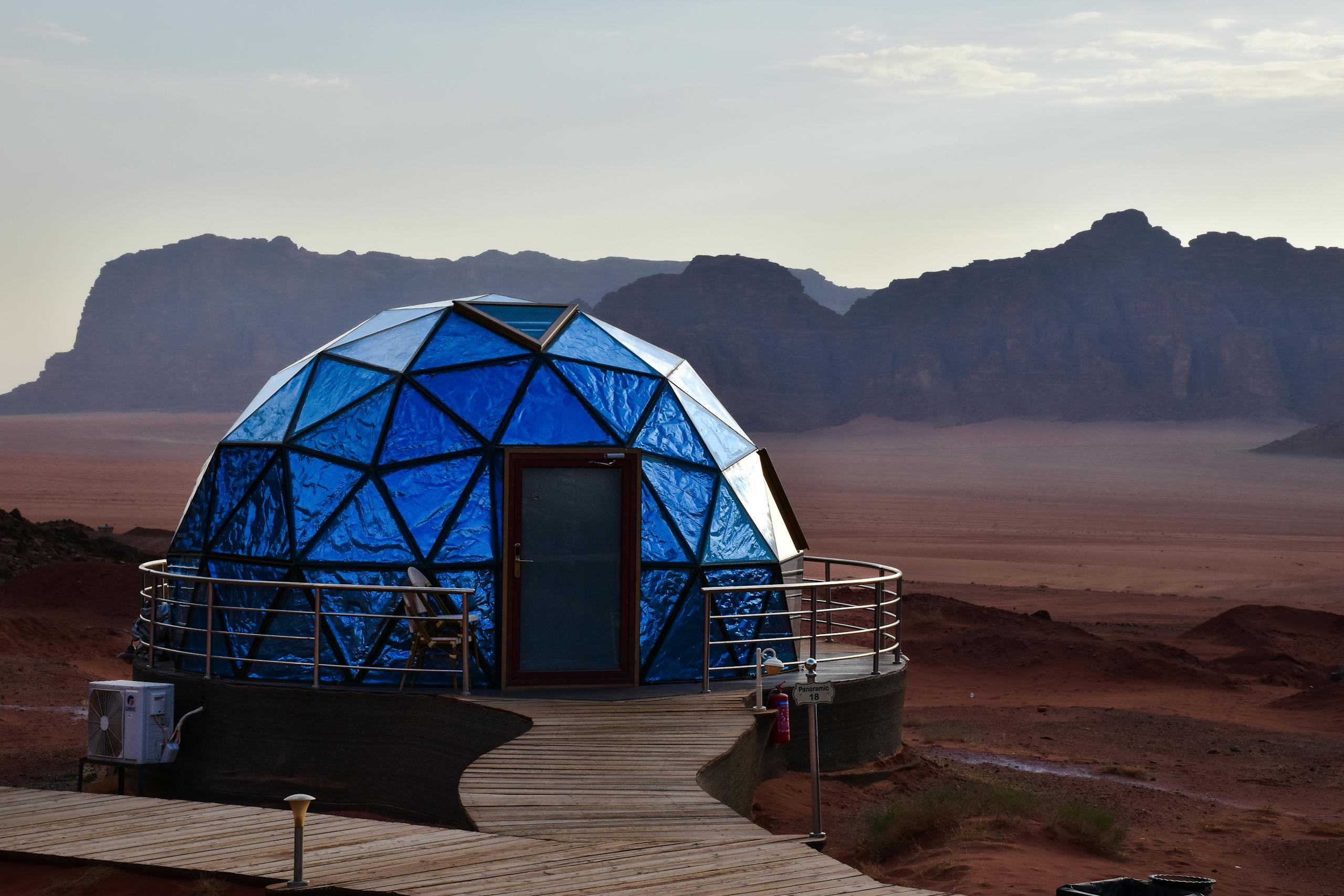
Sun Outdoors Moab has Airstream-style rentals and cabin setups that give you outdoor atmosphere with real comfort. We have seen these firsthand and they work well — well-located, comfortable, and the kind of stay that makes Moab feel like more than just logistics. The property is right in town, which means food and services are never far.
Pretty matters. Practical matters more. The best glamping stay is the one that fits where you are actually spending your days — not the one with the best photo angle that requires a 45-minute drive before every adventure.
Best for: couples, groups, and travelers who want outdoor atmosphere without camping gear.
Campgrounds Along Highway 128 and the Colorado River
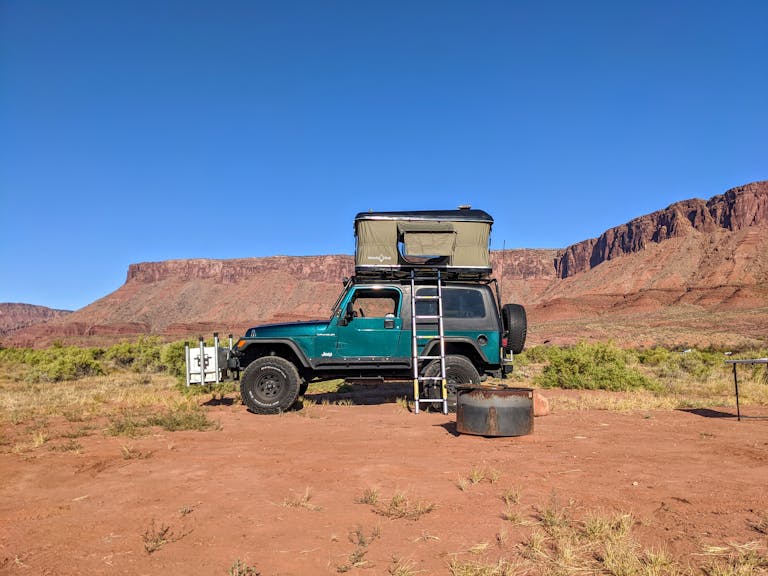
One of our personal favorite Moab lodging experiences is the designated BLM campgrounds along Highway 128 and the Colorado River corridor — and they are worth knowing about because most people do not fully understand what they are before they show up.
These are not campgrounds with hookups, showers, or running water. They are designated sites with vault toilets, picnic tables, and fire rings. That is the full list of amenities. You must be completely self-contained — bring your own water, manage your own waste, and plan accordingly. The nearest water fill before heading out is at Lions Park at the Hwy 191 and UT-128 junction in Moab.
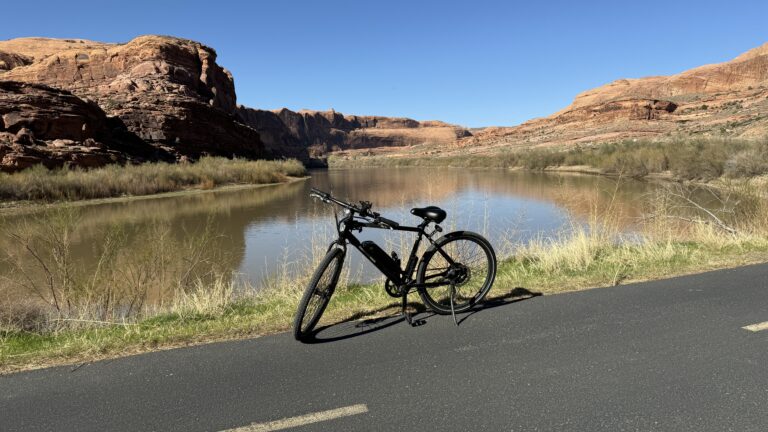
That said, the setting is genuinely spectacular. Waking up with canyon walls around you and the Colorado River nearby is a completely different experience from staying in town. The sites are $20 per night as of the writing of this article, individual sites are first-come, first-served with no reservations, and they fill fast — arrive by early morning during spring and fall if you want one of the better spots. Goose Island is the closest campground to town at just 1.4 miles from the Hwy 191 junction, and it fills first. The corridor stretches farther out with a dozen BLM campgrounds at various distances, including Big Bend, Hittle Bottom, and Fisher Towers farther out.
Many sites along the corridor can accommodate RVs, but only if you are fully self-contained. No hookups means no hookups.
Best for: self-contained campers and RVers who do not need hookups, road trippers who want the river corridor experience, and anyone doing multiple nights who wants to mix a scenic stay with a town reset.
Boondocking and Dispersed Camping
Free dispersed camping around Moab is obviously the best budget option in the area. It can also be very easy to get wrong if you are relying on old blog posts, old GPS pins, or “I’m sure it’s fine” energy.
The rules have become more specific. BLM guidance notes that within 20 miles of Moab, camping is generally only allowed in developed campgrounds. Dispersed camping may still be available in specific areas beyond that range, but stay limits and allowed zones vary. Check current BLM maps and guidance before your trip — not when you arrive.
When it works, boondocking gives you space, quiet, and a version of the desert the national parks cannot offer. We love that side of it. But you need to bring everything you need, manage waste properly, and leave the area cleaner than you found it.
Best for: experienced self-sufficient campers, RV travelers comfortable without hookups, and budget travelers who have done the current research.
Should You Stay Inside the National Parks?
Maybe — but for most first-time Moab visitors, I would not make it the main plan.
Arches has Devils Garden Campground, the only campground in the park. Sites can be reserved from March 1 through October 31 and are usually full every night during busy season. There are no hookups, no dump station, and no showers.
Canyonlands Island in the Sky has Willow Flat Campground — 12 first-come, first-served sites, no water, open year-round, with a 28-foot vehicle limit. That can be a beautiful and memorable stay if you get a site and are fully prepared.
It can also be a terrible plan if your whole lodging strategy is “hopefully it works out.”
Both options are best for camping-focused trips with limited amenities expectations. For most first-timers, Moab is the easier and more flexible basecamp.
The Mix Strategy: What We’d Do for a Longer Trip
For a longer Moab stay, mixing lodging types is the approach we keep coming back to — and most lodging guides skip it entirely.
The idea is simple: spend a couple of nights boondocking outside town if you are set up for it, a night or two at a paid campground along the river, and one or two nights at a full hookup RV park in town. That gives you three versions of Moab:
• The quiet desert version.
• The canyon-and-river version.
• The comfortable town-reset version.
The free nights bring the average nightly cost way down, and the full hookup nights do double duty. Dump tanks, fully charge batteries, deep clean the rig, do laundry, restock groceries, eat a good meal without cooking.
If Moab is a stop on a longer road trip, that reset matters.
A lot.
You leave with tanks empty, the rig clean, and nothing to deal with at home except putting it away. It is a practical strategy that also makes the trip richer — each lodging type gives you a different side of Moab, and the variety is part of what makes a longer stay worth it.
When to Book
Spring and fall are the best seasons to visit Moab, and they are the most competitive for lodging.
April, May, September, and October fill fast — especially well-located hotels, full hookup RV sites, river corridor campgrounds, and glamping properties. If you have specific needs like hookups, pet-friendly lodging, or a walkable location, the window is even shorter.
Summer and winter offer more flexibility, but both come with tradeoffs. Book the key pieces early either way and let the rest of the trip breathe.
For seasonal planning, read [Best Time to Visit Moab: Crowds, Weather & What I’d Choose].
What I’d Choose
For a first Moab trip, I would stay in or near town. It makes everything easier: Arches, Canyonlands Island in the Sky, groceries, food, fuel, and the reset time that makes the whole trip feel more manageable.
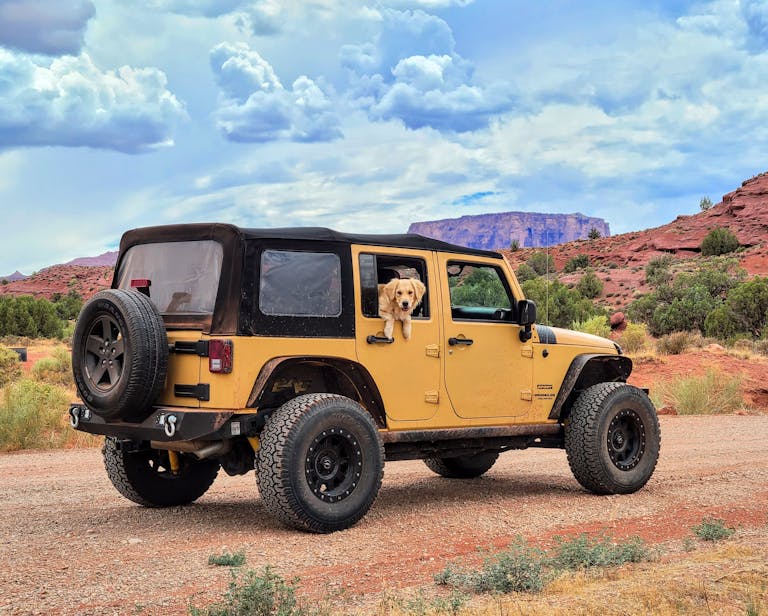
If we are RVing with Wilson and Journey in extreme weather, full hookups and climate control come first. If the weather is fine and the trip is longer, I would mix it — a few free nights, a river corridor site, and one or two nights at a full hookup park for the reset.
But for a first visit?
Make it easy on yourself. Moab already gives you plenty to figure out. Your lodging should help the trip, not become another thing you have to survive.
The Bottom Line
The best place to stay near Moab for most first-time visitors is in or very near Moab town.
That gives you the easiest access to Arches, Canyonlands Island in the Sky, restaurants, groceries, fuel, tours, and the reset moments that matter after long desert days. If you are RVing and weather is a factor, full hookups in town take the biggest variables off the table. If you want scenery, the river corridor delivers. If you want free and are fully prepared, boondocking still works — just verify the current rules first.
Staying for a week? Mix it. Lower average cost, better overall experience, and a proper reset before wherever the road takes you next.
For lodging links and booking tools, visit our Moab Road Trip Resources page.
For trip length planning, read [How Many Days Do You Need in Moab? A Realistic Trip Breakdown].
For the full planning picture, start with the [Ultimate Moab Travel Guide: What’s Worth It, What to Skip & How to Plan].
For seasonal booking strategy, read [Best Time to Visit Moab: Crowds, Weather & What I’d Choose].