What to Expect at Canyonlands National Park for Your First Visit
Canyonlands National Park is huge, rugged, dramatic, and honestly a little misunderstood by first-time Moab visitors.
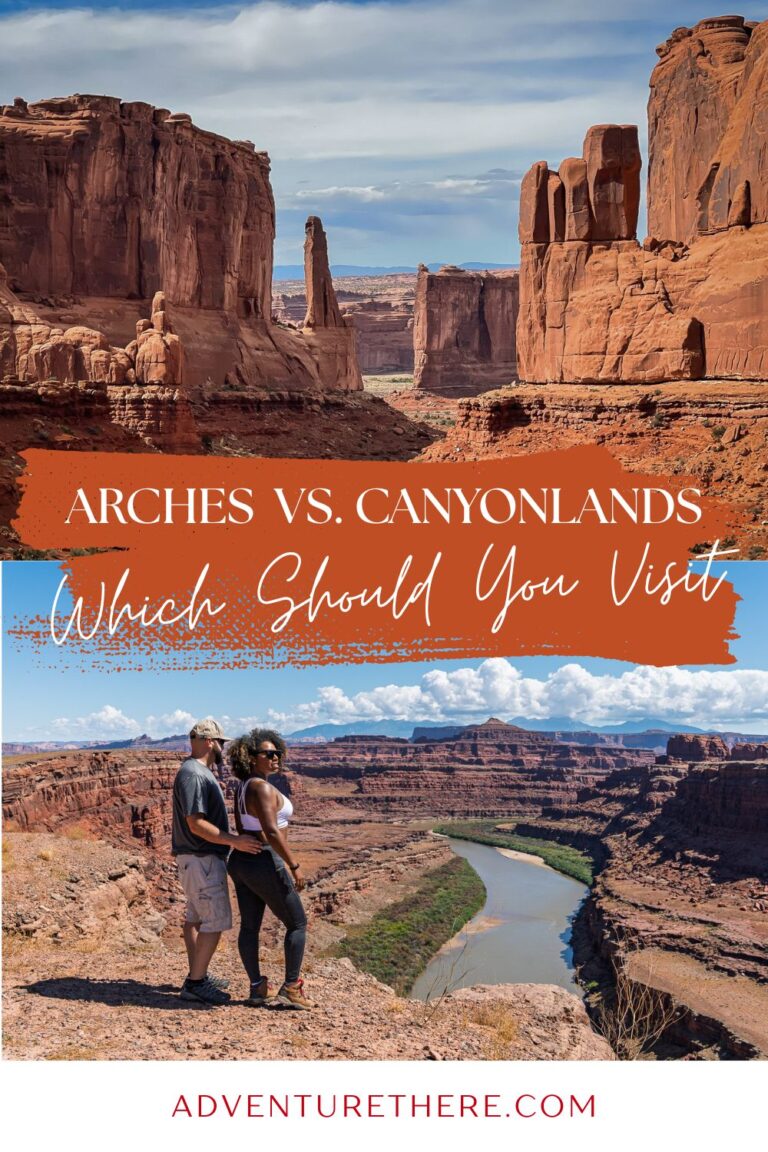
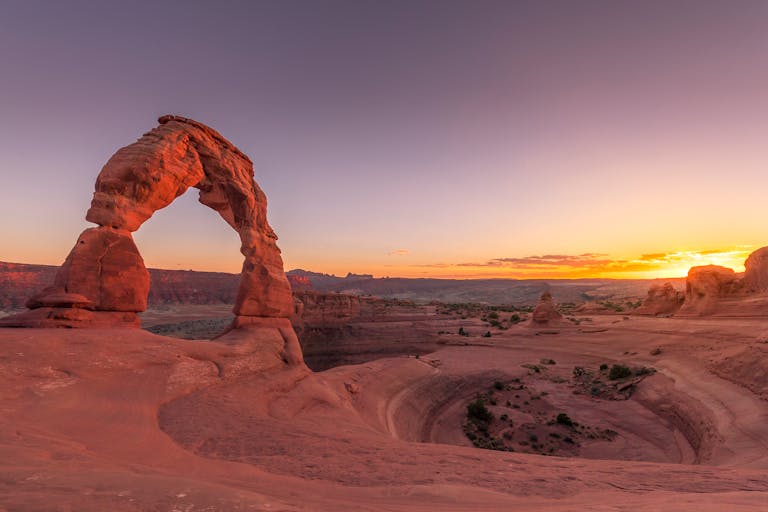
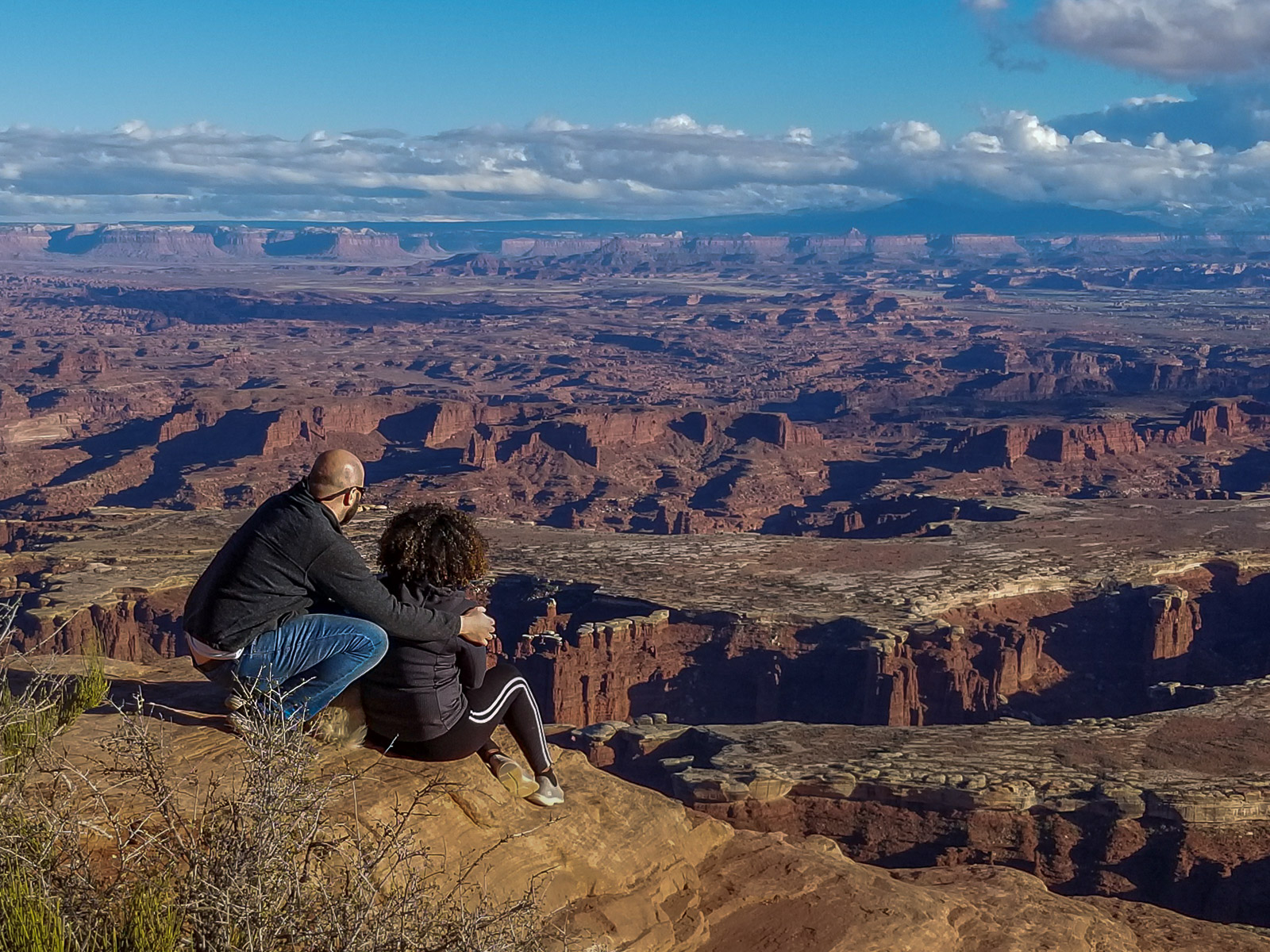
A lot of people treat it like the “other park” near Arches. We don’t. If you’re trying to compare Canyonlands with Arches, the biggest difference is how each park feels. Canyonlands — especially Island in the Sky — is our personal pick. Arches is iconic and worth visiting for good reason, but Canyonlands has that wide-open, canyon-dropping-away-forever feeling that makes you stop talking for a second and just stare.
But here’s the thing: Canyonlands is not one simple park entrance with everything neatly lined up in a row. It has different districts, long drives between them, limited services, exposed conditions, and a much more spread-out feel than most first-timers expect.
So, if this is your first visit, the biggest thing to know upfront: you probably want Island in the Sky. It is the closest district to Moab, the easiest to visit on a shorter trip, and the best introduction to Canyonlands for most travelers.
Here is what to expect at Canyonlands National Park for your first visit — including which district to choose, what to prioritize, and how to avoid accidentally planning a “quick stop” that turns into a very long day.
Quick First-Time Canyonlands Snapshot
Closest town: Moab, Utah
Best district for first-timers: Island in the Sky
Distance from Moab: Island in the Sky is about 32 miles from Moab along a paved scenic drive
Best seasons: Spring and fall
Best time of day: Morning, late afternoon, or sunset
Best for: Enormous canyon views, scenic overlooks, short hikes, photography, and big desert landscapes
Dog-friendly? Not really. Dogs are generally not allowed on trails, overlooks, or in the backcountry.
Camping inside the park? Yes, but limited and primitive.
Do you need a 4×4? Not for Island in the Sky’s main paved scenic drive and overlooks. Backcountry routes are a completely different story.
Canyonlands feels wilder and less compact than Arches. That is part of what makes it so incredible — but it also means paying attention to distances, services, and which part of the park you are actually visiting.
Canyonlands Is Bigger Than You Think
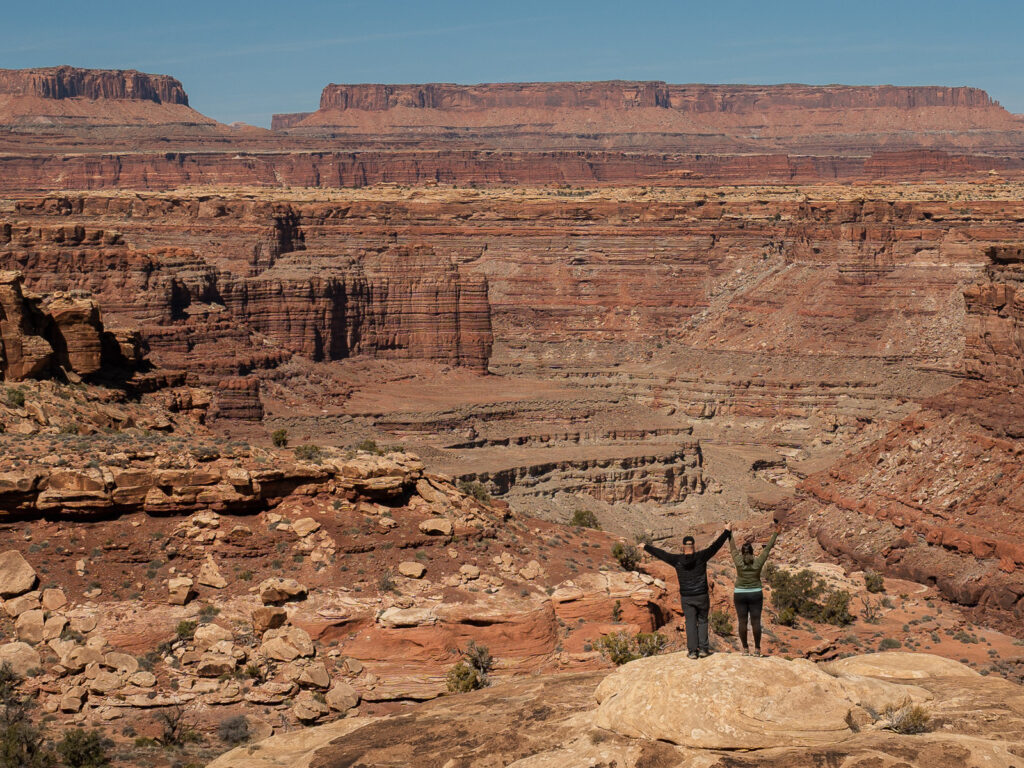
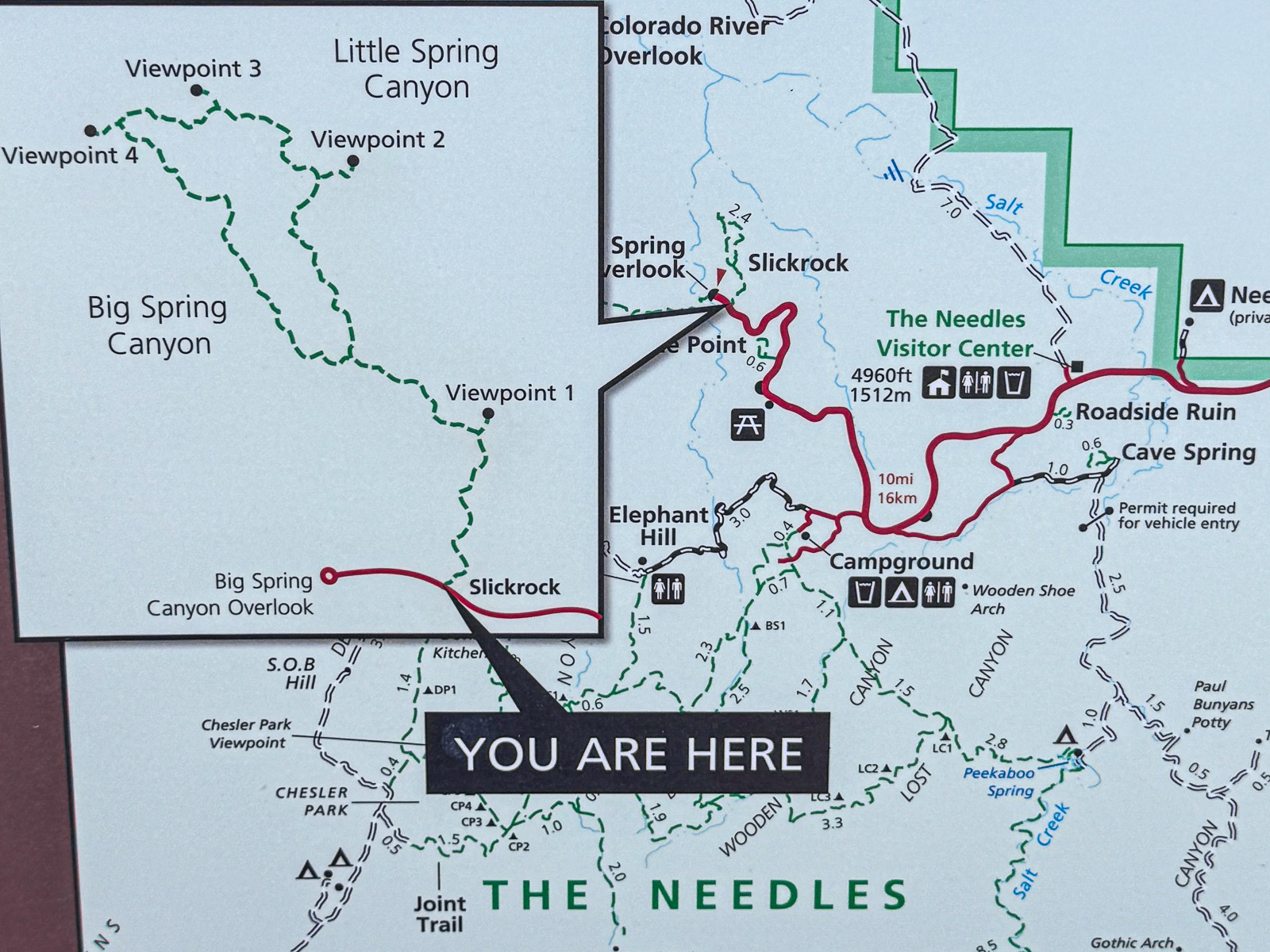
The first thing to understand is that Canyonlands is divided into four separate areas, and they are not connected by a simple park road. Each requires its own approach because no bridges or interior roads link them together.
• Island in the Sky — reached from US-191 north of Moab via UT-313
• The Needles — reached from US-191 south of Moab via UT-211
• The Maze — only reached by unpaved roads that may become impassable when wet
• The Rivers & Horseshoe Canyon — accessed by non-motorized boat on the Colorado or Green River, or by a long dirt road to the detached Horseshoe Canyon Trailhead near Goblin Valley State Park
That matters a lot for planning. If you are staying in Moab and only have one day for Canyonlands, do not casually put all four areas on the same itinerary. That is not a plan. That is a cry for help.
For most first-time visitors, Island in the Sky is the right choice. It gives you those immense Canyonlands views without requiring a remote backcountry expedition.
Which Canyonlands District Should You Visit First?
Island in the Sky
Island in the Sky is the district we recommend for most first-time visitors. It is the closest to Moab, the easiest to fit into a shorter trip, and packed with overlooks that deliver sprawling views without requiring long hikes. This is where you’ll find Mesa Arch, Grand View Point, Green River Overlook, Shafer Canyon Overlook, Upheaval Dome, White Rim Overlook, and the main scenic drive experience. If you only have time for one Canyonlands district, this is the one.
The Needles
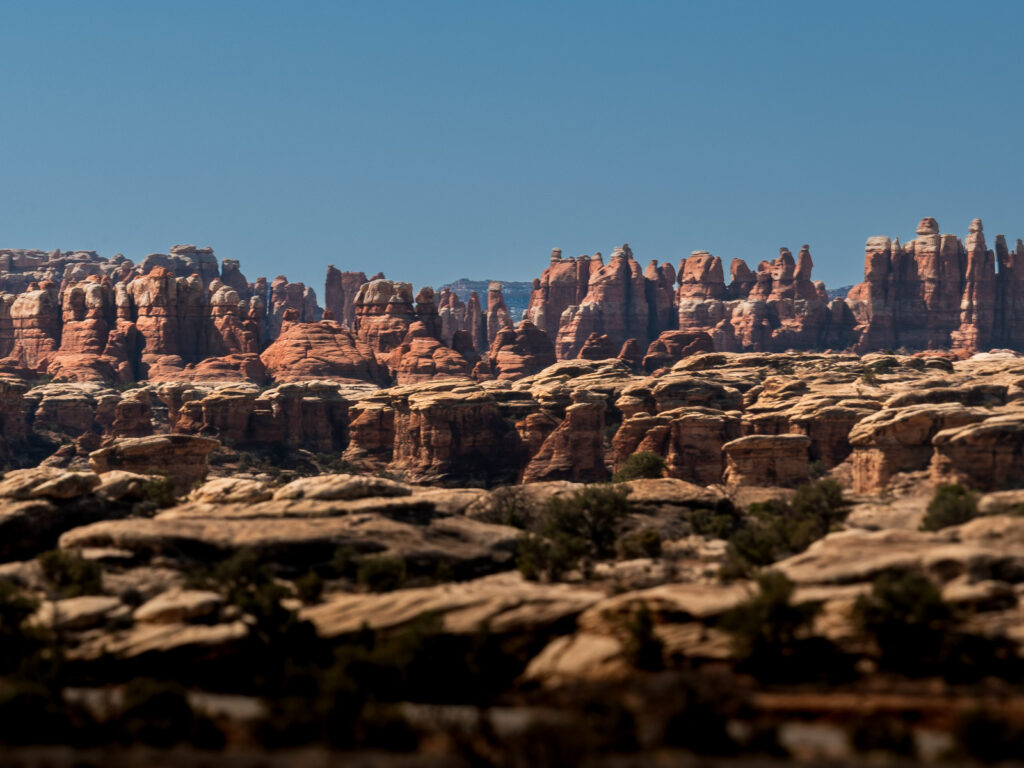
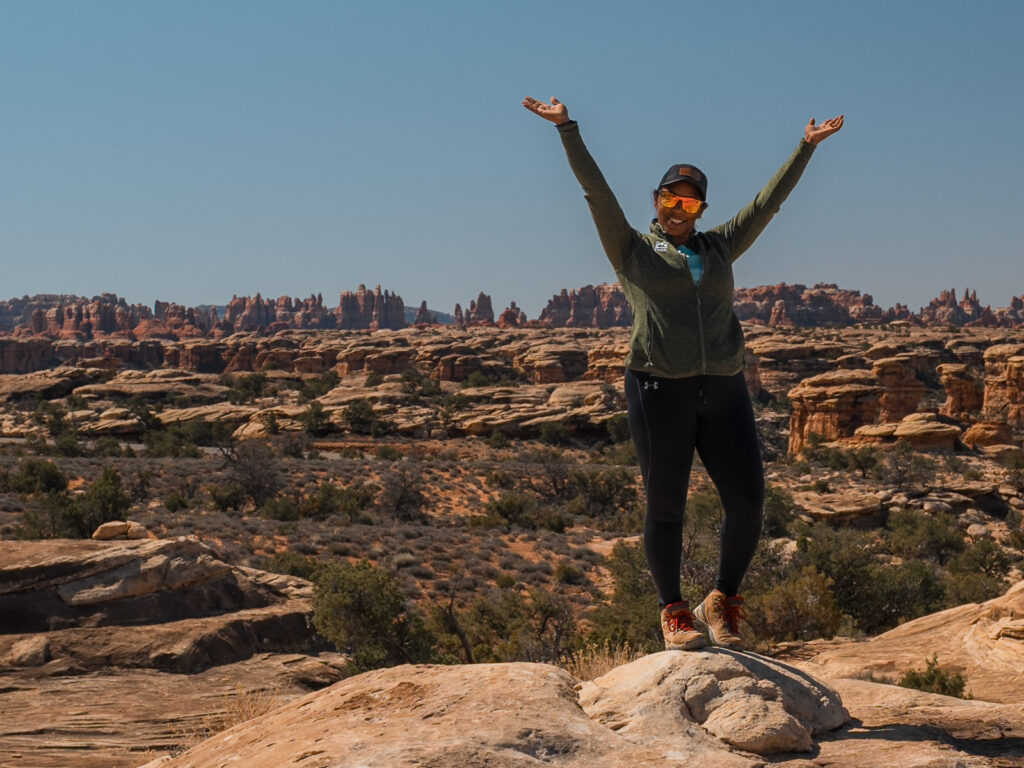
The Needles is farther from Moab and better for travelers who want hiking, backpacking, and a more remote-feeling experience. The landscape shifts here — colorful sandstone spires, deep canyon slots, and extensive trail networks instead of sweeping rim overlooks. Beautiful and worth considering if you have more time and want to move through the landscape rather than look down into it.
The Maze
Extremely remote and best for experienced backcountry travelers with the right gear, vehicle, permits, and planning. The Maze lives up to its name. No services, serious route-finding required, and the kind of solitude that comes from being genuinely far from anything resembling easy access. Not the district to visit casually on a first Moab trip.
The Rivers & Horseshoe Canyon
The fourth and most overlooked part of Canyonlands is experienced from the water or on foot in a detached canyon unit far from Moab.
The Colorado and Green Rivers run through the park and are accessible by non-motorized boat — canoes, kayaks, and rafts launching upriver. Cataract Canyon, where the two rivers meet, is serious whitewater. Horseshoe Canyon is a separate, non-contiguous unit accessible by a long dirt road near Goblin Valley State Park off UT-24. The hike there leads to some of the most significant ancient rock art panels in North America.
All Four Areas at a Glance
For planning purposes, here is how the four areas of Canyonlands compare:
| District | Primary Access | Best For | Vibe & Logistics |
| Island in the Sky | UT-313 (Paved) | First-timers, panoramic views, day trips | Paved overlooks, heaviest crowds, closest to Moab |
| The Needles | UT-211 (Paved) | Day hikers, backpackers, sandstone formations | Extensive trail networks, deep slickrock canyons |
| The Maze | Unpaved dirt roads (4WD required) | Serious backcountry travelers, remote self-sufficiency | Complete isolation, route-finding skills, zero services |
| The Rivers & Horseshoe Canyon | Rivers or graded dirt roads | Boaters, rafters, and rock art enthusiasts | Towering canyon walls, ancient pictographs, intimate quiet |
What Canyonlands Is Actually Like
Canyonlands feels enormous.
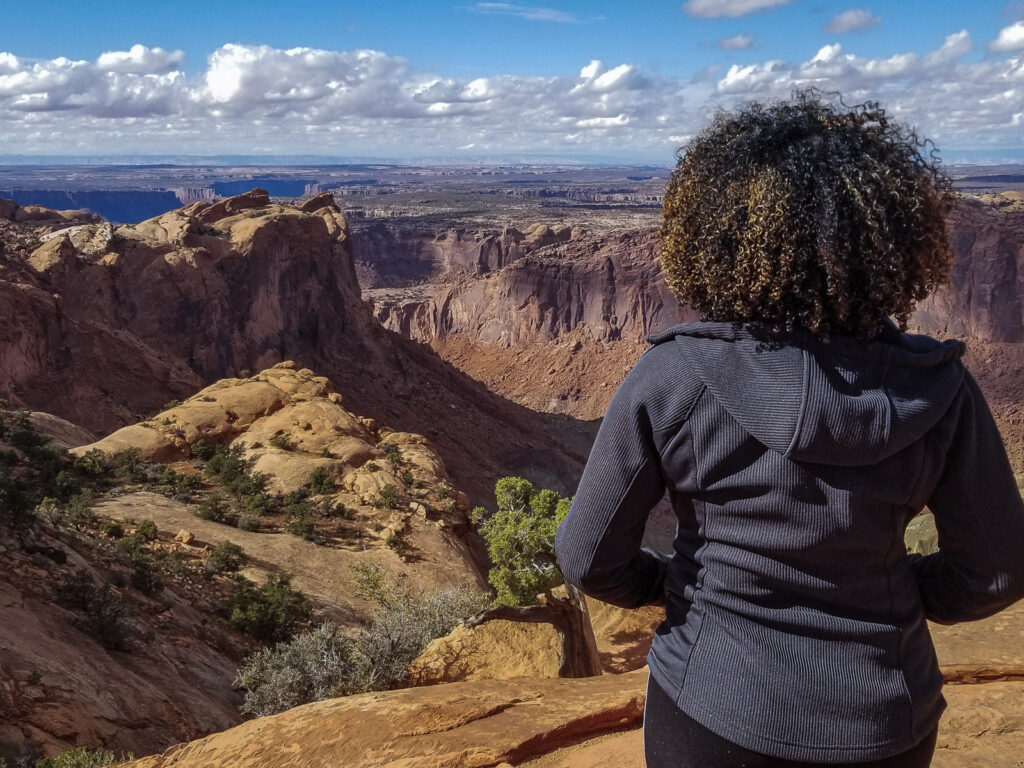
Arches is easier to grasp because you are moving from one formation to another. Canyonlands is more about scale. You stand at an overlook and suddenly the land opens up into canyons, mesas, cliffs, rivers, roads, and layers that seem to go on forever.
That is why we love it so much. Canyonlands does not always give you the same quick, obvious payoff. It gives you a bigger, quieter, more rugged kind of awe.
Island in the Sky is also very manageable for first-timers. You can drive the main paved road, stop at overlooks, add a few short hikes, and have an incredible day without needing a 4×4. But the park still feels remote enough that you should bring water, snacks, layers, trail shoes, and offline maps. Desert landscapes have a way of reminding you who’s in charge.
Our Favorite Stops in Canyonlands for a First Visit
For a first visit to Island in the Sky, we’d prioritize a few short hikes and overlooks near Moab that deliver the biggest payoff without turning the day into a marathon.
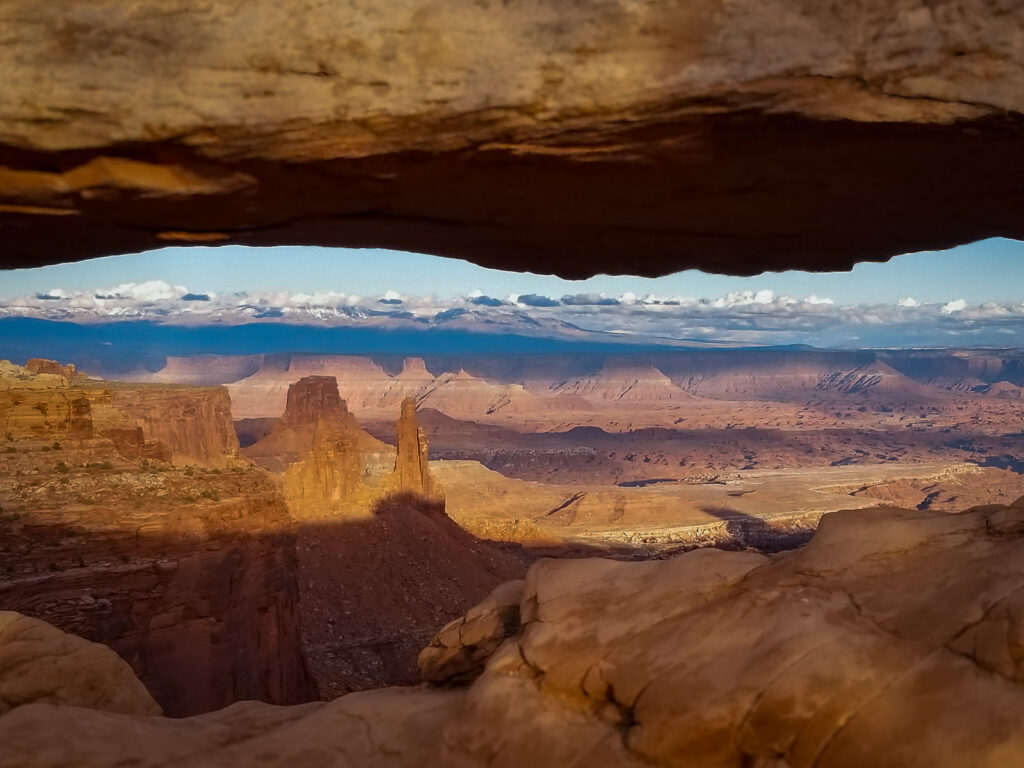
Mesa Arch is one of the most famous stops in Canyonlands, especially at sunrise. The short hike leads to an arch that frames a massive canyon view. Even if you skip sunrise, it’s worth seeing any time of day.
Grand View Point is exactly what it sounds like. The view is sprawling, and the short trail along the rim is a great way to feel the scale of the park without committing to a strenuous hike.
Green River Overlook gives you that layered canyon look that makes Canyonlands feel so different from Arches.
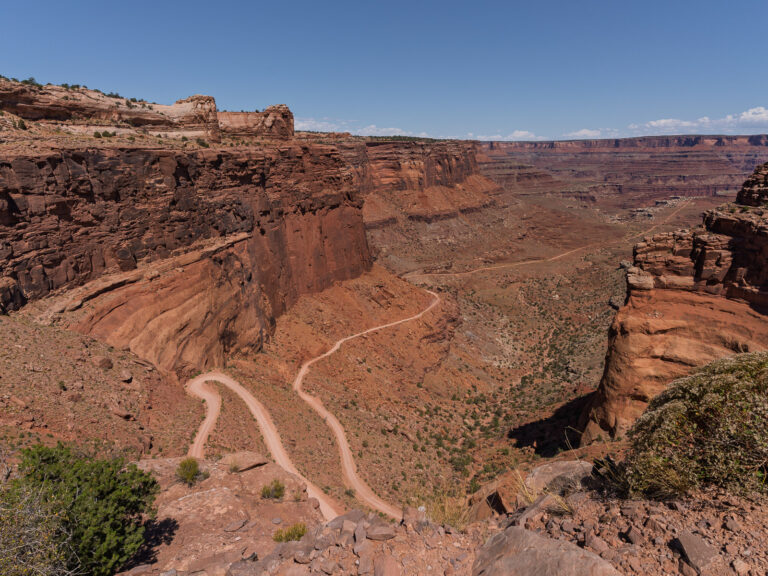
Shafer Canyon Overlook is a must-stop, especially if you are drawn to the dramatic roads carved through the landscape below.
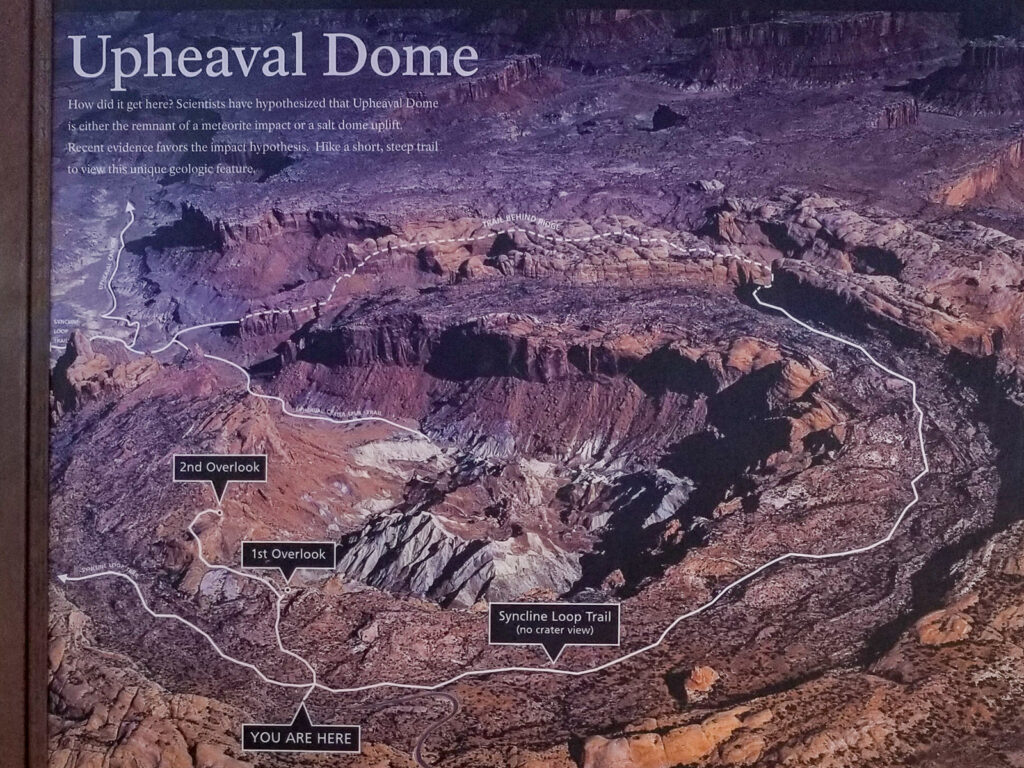
Upheaval Dome feels more geologic and mysterious than the overlooks around it. Scientists have debated whether it was caused by a salt dome or a meteor impact, which adds a genuinely interesting “what am I actually looking at?” layer to the stop.
White Rim Overlook is worth considering if you want another short hike with a big payoff and slightly fewer people than the busier stops.
And the drive itself belongs among the best scenic drives through the Moab area. Canyonlands is a park where the pullouts matter as much as the designated overlooks.
Five Popular Canyonlands Hikes to Know Before You Go
You do not need to hike all of these on a first visit. Think of this as a planning menu.
| Hike | Distance | Difficulty | Good To Know |
| Mesa Arch Trail | About 0.7 miles | Easy | Short, popular, and famous for sunrise canyon views. Worth it any time of day. |
| Grand View Point Trail | About 1.9 miles | Easy | Big rim views and one of the best first-time hikes in the park. |
| White Rim Overlook Trail | About 1.8 miles | Easy | Great views with fewer crowds than some busier stops. |
| Upheaval Dome via Crater View | About 1.3 miles | Moderate | Short but more rugged; leads to one of the park’s strangest features. |
| Druid Arch Trail | About 11 miles | Hard | A serious Needles District hike — not a casual first-timer add-on. |
What to Expect With Crowds and Timing
Canyonlands usually feels less crowded than Arches, but it is not empty. Popular stops like Mesa Arch, Grand View Point, and major overlooks can still get busy in spring, fall, and peak windows.
The good news is that Canyonlands often feels more spread out. Because so many experiences are overlook-based, the crowd intensity can be lower than a packed Arches trailhead. But parking can fill at popular stops, and sunrise at Mesa Arch is not exactly a private spiritual retreat.
Go early or late if you can. Morning light is beautiful, late afternoon is stunning, and sunset in Canyonlands is the kind of thing that makes you forget how many photos you already took that day.
Best Time to Visit Canyonlands National Park
Spring and fall are usually the best times to visit. The weather is more comfortable, the light is beautiful, and hiking or overlook-hopping feels much better than it does in peak summer heat. Still, the best time to visit Moab and Canyonlands depends on whether comfortable weather, lighter crowds, or lower prices matter most to you.
Summer can work, but plan around heat, sun exposure, and afternoon storm risk. Arrive early, carry plenty of water, and don’t underestimate how intense the sun feels on exposed rim trails.
Winter can be quieter and beautiful, but conditions are more variable — cold mornings, shorter days, icy patches, and changing road conditions in more remote areas.
Camping Inside Canyonlands National Park
Canyonlands has camping options, but they are limited and more basic than many first-time visitors expect.
At Island in the Sky, Willow Flat Campground has 12 first-come, first-served sites and is open year-round. Toilets, picnic tables, and fire rings are available, but there is no water.
In The Needles, Needles Campground offers more options, with some reservable sites in Loop B and first-come, first-served sites in Loop A. Best suited to tents and small, self-contained campers.
If you want hookups, showers, laundry, or easy supply access, staying in Moab or at a nearby campground will be easier.
Where to Stay Near Moab for Arches and Canyonlands
Tips for Your First Visit to Canyonlands
The biggest tip is simple: choose the right district.
If it is your first visit and you are staying in Moab, start with Island in the Sky. Don’t underestimate the driving time between districts, and don’t assume you can casually see multiple areas in one day.
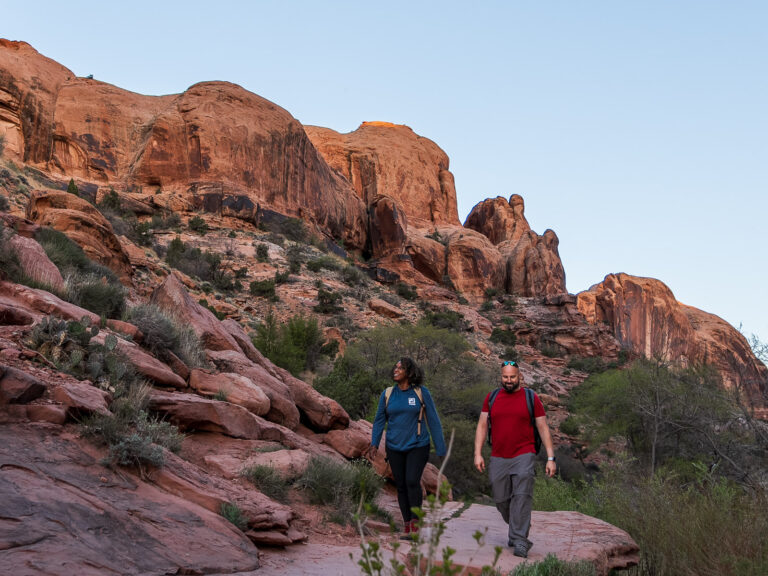
Bring water, snacks, layers, sun protection, and trail shoes or hiking footwear. Even short hikes can include slickrock, uneven surfaces, exposure, and hot conditions.
Download offline maps before you go. Cell service can be unreliable, and Canyonlands is not the place to rely on an “it’ll probably load when we get there” strategy.
Be realistic with your itinerary. Canyonlands rewards slowing down. If you rush every overlook and scenic stop, you may miss the whole point of the park — which is standing still long enough to feel how truly large it is. Our complete Moab trip planning guide can help you fit Canyonlands into the rest of your visit without overloading the itinerary.
Visiting Canyonlands With Dogs
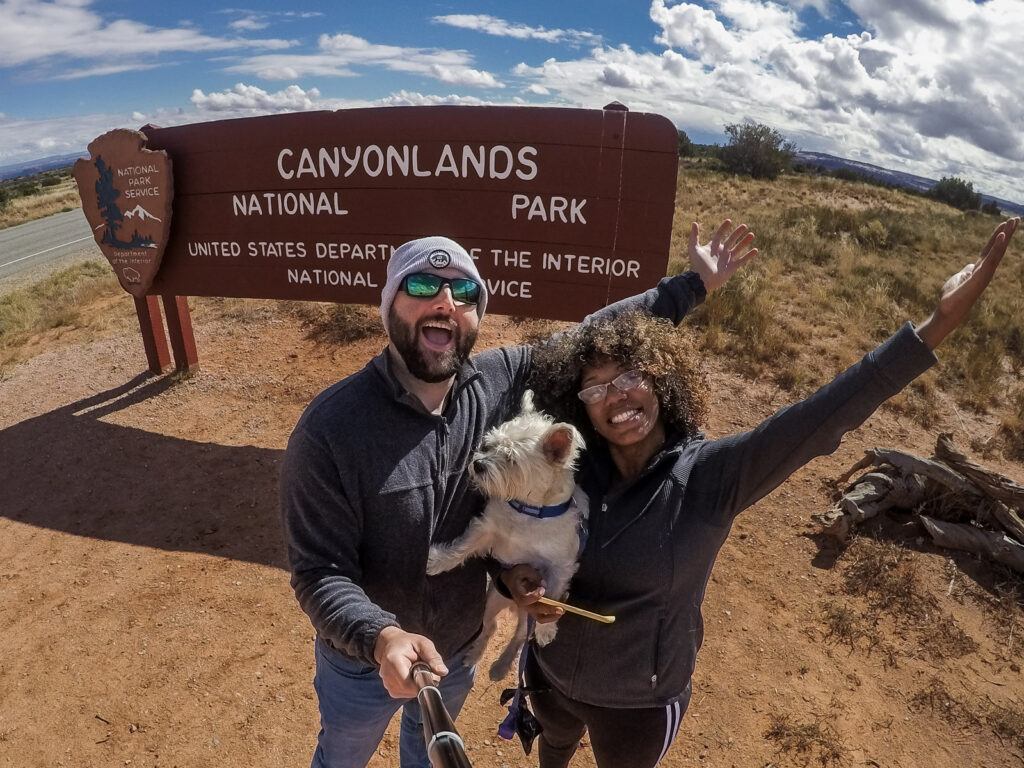
Canyonlands isn’t dog-friendly for hiking or the overlook experience most first-timers want.
Pets are allowed only at developed campgrounds, on paved roads, in parking lots, and on the Potash/Shafer Canyon road between Moab and Island in the Sky. Not on hiking trails, at overlooks, in the backcountry, or in buildings.
We never really bring Wilson and Journey to Canyonlands. Instead, we plan dog-friendly adventures outside the national park and use Canyonlands as more of a scenic drive and limited-stop experience if we happen to be driving through the park on our way in or out of Moab. Spring and fall are much better for dogs in the Moab area than summer.
What to Pack for Moab: Desert Road Trip Essentials
What We’d Prioritize on a First Canyonlands Visit
If it were our first visit and we had one solid day, we would focus on Island in the Sky and not try to overcomplicate it.
Start with Mesa Arch, then work through the scenic drive and overlooks: Green River Overlook, Shafer Canyon Overlook, Grand View Point, White Rim Overlook, and Upheaval Dome if time and energy allow.
If you want to add Dead Horse Point State Park, it is right near the Island in the Sky route and pairs well with a Canyonlands day. It has a separate entrance fee, so if you are short on time or keeping costs down, it is okay to save it for another trip.
Canyonlands is not just “the other park near Moab.” It is endless, dramatic, easy to underestimate, and worth building real time into your Moab trip for.
Use Moab Road Trip Resources: Lodging, Gear, Tours & Planning Tools for passes, gear, maps, lodging, and planning links before you go. Then give Canyonlands real time — the park gets better the longer you let it feel big.